Essence of Sun and Stone
There are vineyards that grow from the soil.
And there are vineyards that grow from stone.
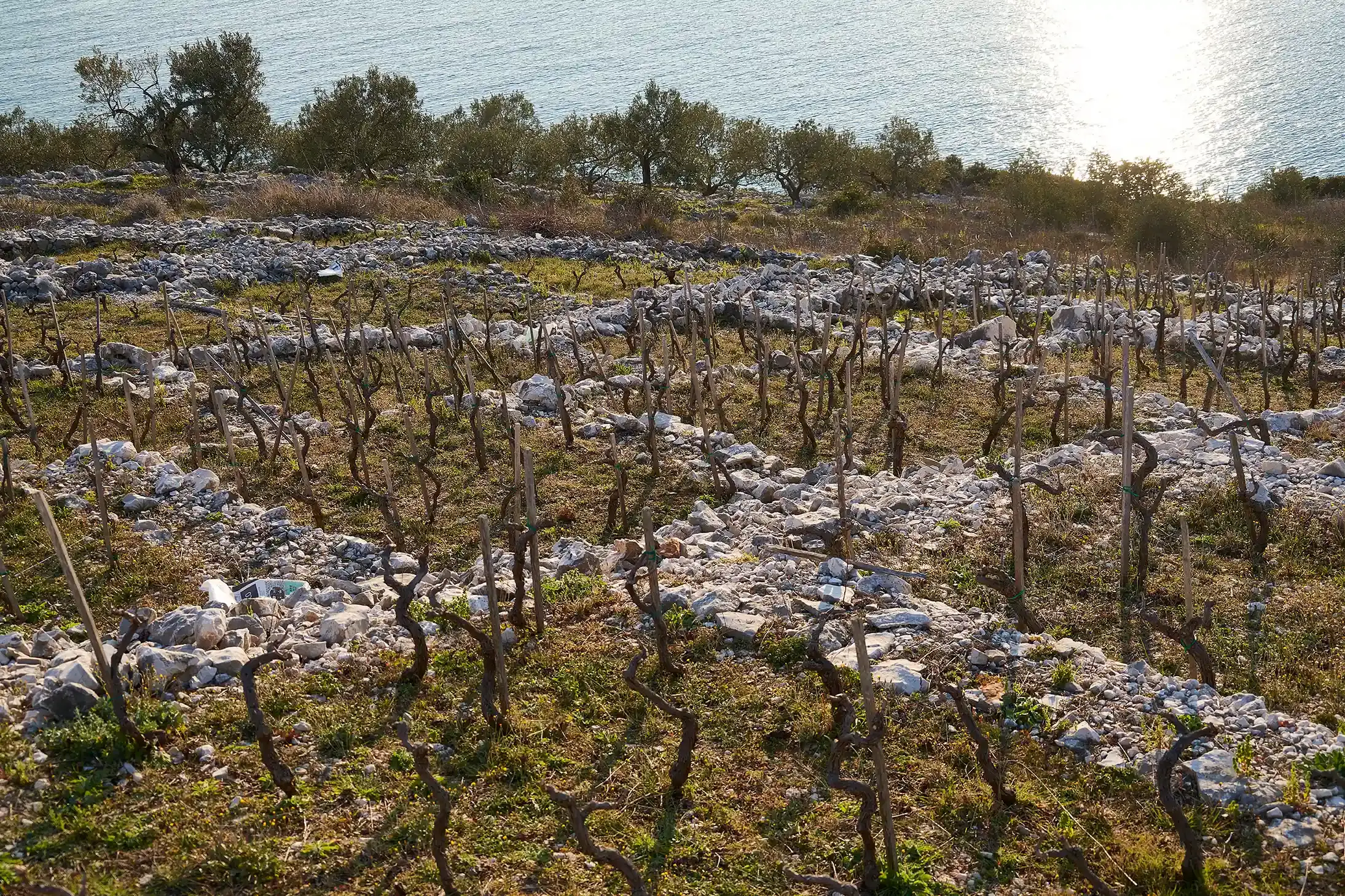
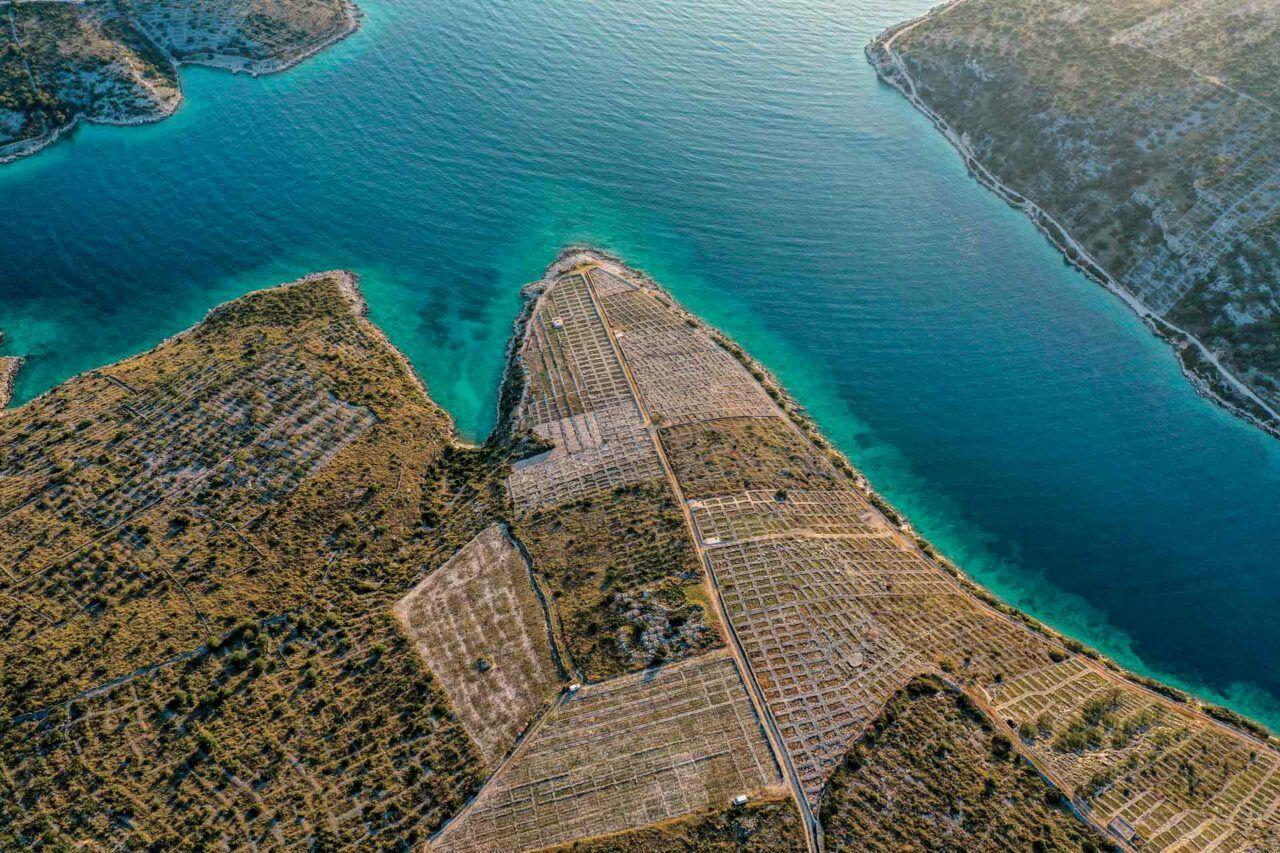
On Bucavac, three kilometers south of Primošten, the land rises steeply toward the Adriatic. From a distance, it looks like white lace spread across the hillside. Up close, you see what it truly is — generations of hands shaping rock into life.
For centuries, families removed stone from the karst to create small pockets of earth where vines could survive. The stone did not disappear. It became dry-stone walls. Layer by layer, year after year, they formed a landscape that is both vineyard and monument.
Nothing here is easy.
Everything is done by hand.
The plots are small. The paths are narrow. The terrain is too steep for machines. Summer brings heat that burns the ground. Rain can be scarce for months. Wind never fully rests.
And yet — Babić thrives.
Perhaps Babić drinks more sweat than water.
In furrows holding only a handful of soil, sometimes without a single drop of rain all summer, it still gives fruit. The yield is never abundant — usually half a kilo per vine — but it is exceptional.
Low yield is not a sacrifice. It is the beginning of quality.
On Bucavac, both the vine and the grower must endure. The roots dig deep into limestone, searching for life. The grower bends again and again to tend each low bush vine — almost in quiet dialogue with it.
Between the lines of dry-stone walls, we do not only work.
We remember.
We admire our ancestors whose vines we inherited, and through them we continue to build our own tradition of Babić — the Babić of the Prgin family.